Cost exposure on a leaking roof grows with each wet day, so the first call in North Reading, MA is about stopping that growth. We ask where water is entering, what it can reach and how the roof is accessed. Then we protect the interior, confirm a safe route and decide whether a temporary dry-in is possible before the full inspection.
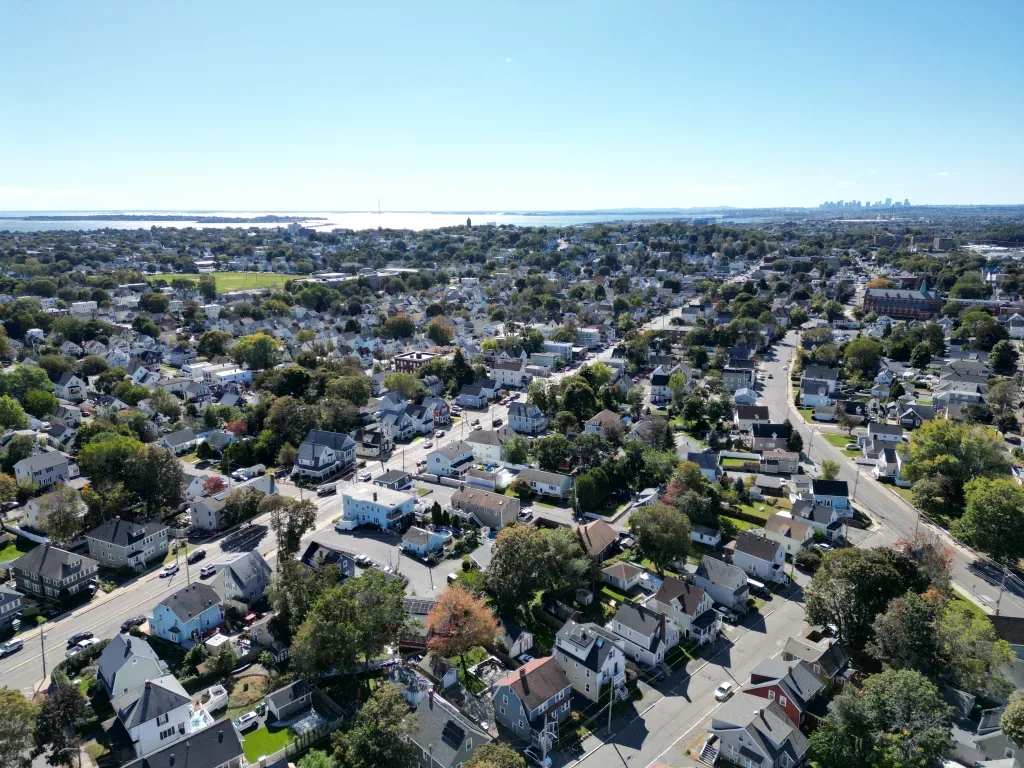
North Reading has an Economic Development Committee focused on local business growth, and town planning resources include work on the Route 28 corridor and redevelopment opportunities. The town connects to the regional commercial market through the Route 28 and I-95/I-93 network. A corridor with redevelopment interest raises a roof question: how much service life is left, and does that change what to repair?
Cost Exposure by the Day
Water on a roof costs more every day it runs, because it wets insulation, finishes and contents in sequence. Insulation holds water and carries it sideways. A small hole in a membrane can wet a large area of board, and once the board is wet the repair area is bigger than the leak. The first hours aim to limit that spread: stop the entry, remove standing water, protect the area below.
The cost update tracks exposure separately from the repair. It lists what the temporary protection cost, what the permanent repair will cost and what damage is already done. An owner sees which part of the bill is the leak and which part is the delay, and that guides how fast to approve the next step.
Interior protection is the cheapest part of the response and the one that saves the most. Plastic over shelving, a drip catch under the active path, a wet vacuum for standing water and a cleared walkway keep a small leak from becoming a claim. We record what was placed and where, with photographs, so the insurer can see that the owner acted at once.
Safe access comes with it. Wet roofs are slick, edges may be unprotected and an unlit stair is no place to carry tools. If the roof cannot be reached safely that day, we say so and hold the roof work for the next window, while the interior work continues.
Route 28 Corridor Roofs
The corridor has roofs of different ages and uses, and the redevelopment work named in town planning raises the question of what stays and what changes. For an existing building, a current roof record is the sensible starting point. We walk each section, record the membrane type, the condition of seams and flashing and the drainage, and rank the sections by remaining life. The record shows the owner whether a repair makes sense or whether the roof is near the end.
That matters for any owner weighing a sale, a lease renewal or a redevelopment plan. A buyer reads a roof survey differently from a facility director, and we write it so both can use it. The survey states what was observed, what was tested and what remains unknown.
Redevelopment interest also changes the schedule. A roof that must last three more years needs a different treatment than one that must last twenty, and an owner who plans to rebuild may want only enough work to keep the building dry. We price the minimum that keeps water out, the middle option that restores a service life and the full replacement, each with its expected years.
Ponding and Drainage Checks
Flat and low-slope commercial roofs fail at low points. Standing water stays after rain, softens sealants, grows algae and loads the structure. We measure the depth at each low point after a dry spell and again after rain, and we trace the cause: a drain set high, a blocked outlet, a deflected deck or insulation that has compressed. The fix depends on the cause, and ponding water repair may range from clearing a drain to adding tapered insulation.
The Lowell station averages 48.51 inches of precipitation across the year, October being a wet month, so water shows up in every season. North Reading roofs sit in the same regional pattern. Regular rain means drains need checking in autumn as well as spring.
The records we keep make the cause easier to find. A photograph of the pond at its widest, the date, the time since the last rain and the position of the nearest drain tell us more than a description. When the same pond shows up in two seasons, the evidence is strong enough to justify a structural or drainage fix and not another patch.
Coating Versus Replacement
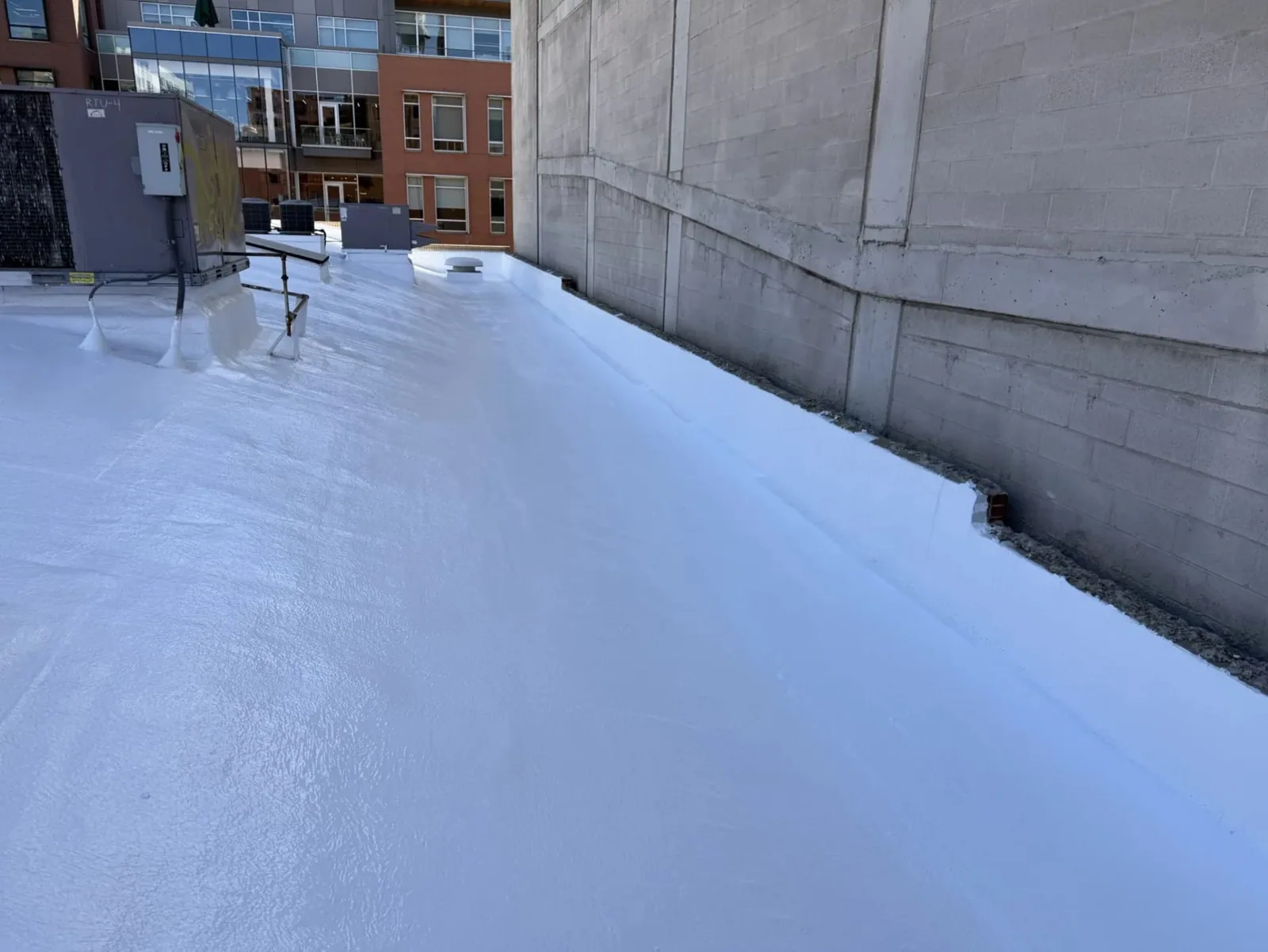
When a roof is old but sound, a restoration coating can extend service at lower cost than replacement. The test is simple. The membrane must be well adhered, the insulation dry and the seams intact. A moisture survey tells us about the insulation, and an adhesion check tells us about the membrane. If those pass, a roof coating restoration is priced next to a recover and a replacement.
If they fail, coating only hides the problem for a season. We say so and show the evidence: wet insulation on the survey, a lifted seam, a core sample. The decision moves to repair or replacement, and the cost update lists the options by service life.
Rooftop Equipment Around the Corridor
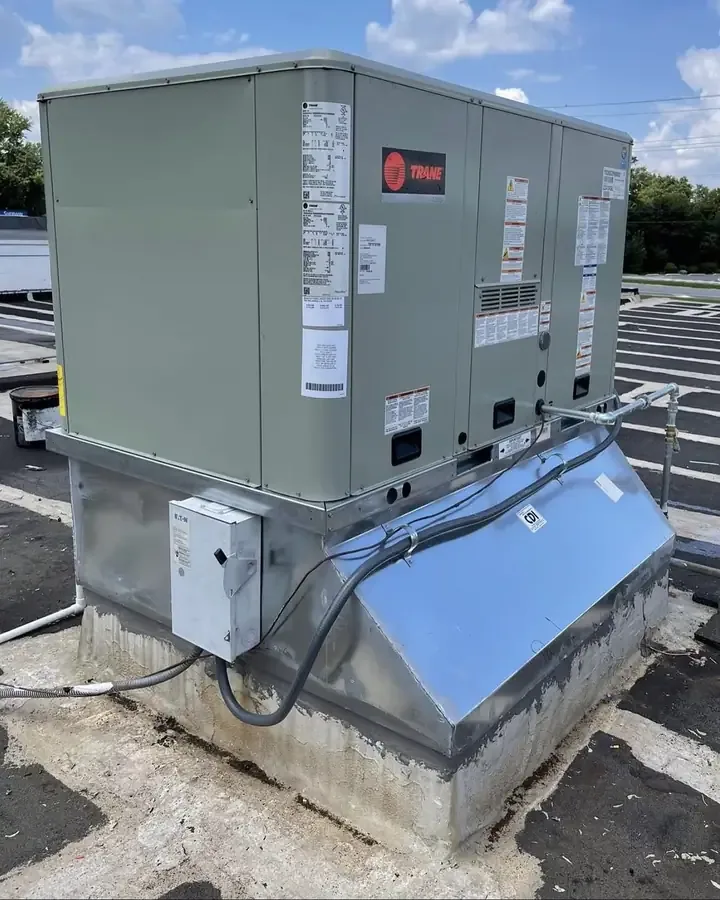
Retail and office buildings along a corridor carry rooftop units, and each unit adds a curb with four corners. We check rooftop equipment curbs and supports for flashing, fasteners and the condition of the membrane around the base, and we note any unit that was added after the roof went on. A leak that tracks with an equipment cycle is often a curb problem, and a curb can be reflashed without replacing the roof.
The same walk checks condensate lines, refrigerant line covers and walkway pads. Service visits wear the membrane along the same path, and pads along that path cost less than a membrane patch.
Next Update and Neighboring Towns
The first update arrives after the inspection and names the repair boundary, the options and the items still unknown. The next update gives the return window for permanent work. An owner with sites in Reading or Wilmington can ask for the updates on one schedule.
The update also carries three timing items: when a crew can start, how long material takes to arrive and which weather hold could shift either date. If a membrane is back-ordered, the temporary protection stays on longer, and the update says how long it is rated to last. A weather hold on a day with rain, wind or cold is logged so the owner sees why the date moved.
Commercial Roofing Questions
What makes a leak cost more each day?
Wet insulation spreads water sideways, so the damaged area grows. The first response limits the spread, and the update separates leak cost from delay cost.
Should an owner reroof before a redevelopment decision?
Not before a condition record. The record shows remaining service life by section, so the owner can repair, recover or wait with the numbers in hand.
When does a coating make sense?
When the membrane is well adhered, the insulation dry and the seams intact. A moisture survey and an adhesion check test those conditions.
How often should drains be checked on a North Reading roof?
In autumn as well as spring, since rain arrives in every season. Photographs of the low points and drains show whether a pond is growing.
How is a corridor roof surveyed for a buyer?
Section by section, covering age, membrane, defects and moisture findings, with a plain line between what was tested and what was assumed.