Route 38 carries most of the commercial traffic in Pelham, NH, running from the Massachusetts line toward Old Bridge Street. The buildings along it are a working mix: auto service bays, retail units, medical practices and restaurants. Each one puts a different load on its roof. A report from that strip begins with three checks: the point of water entry, the protection of the rooms below and a safe path to the roof.
We answer those first, then inspect the roof section by section. The repair boundary, the temporary dry-in and the permanent fix are priced as separate items so the owner or property manager can decide what to approve today and what can wait for dry material. Emergency calls are taken around the clock, holidays included, and a leak report does not wait for a business-hours window.
Route 38 strip buildings
A strip of mixed tenants shares more than a parking lot. It often shares a roof, a drainage path and a set of penetrations. When one restaurant exhaust fan is flashed poorly, the water may travel under the membrane and show up in the medical office two bays down. We trace the stain back along the roof section rather than repair the spot where the ceiling tile is wet. The first walk covers drains, scuppers, curb flashings, seams and the transitions between older and newer membrane.
Restaurants add grease and heat around kitchen exhaust. Medical practices need the interior protected before anything else, because wet ceilings and electrical fixtures are a safety question, not only a repair question. Auto service buildings have overhead doors and often open vents. We record what is below every reported leak, so the temporary protection matches the use of the room. Shared-roof findings are separated by tenant space, the same way they are on a shopping center roof.
Route 128 and the industrial areas
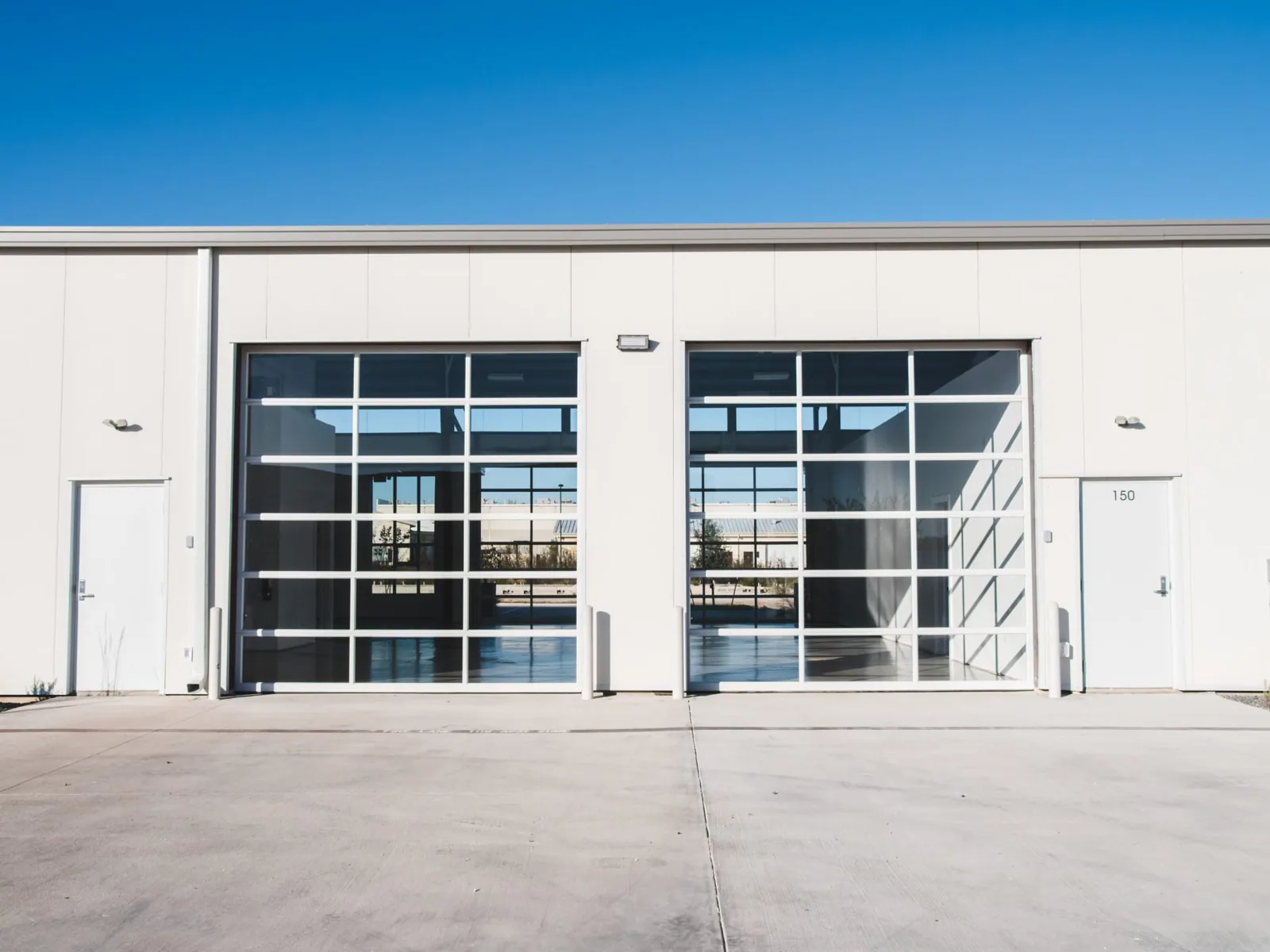
Pelham's planning documents identify Route 128 and two existing industrial areas as additional mixed-use and employment ground. A building in that setting may be a light-industrial shop, an office with a warehouse bay or a service garage. A building in Pelham, or one nearby in Hudson or Tyngsborough, gets the same access plan: lift position, material drop and door closures. The inspection reads the membrane, fasteners or ballast, insulation and edge metal, and then names what is there.
Industrial users usually care most about the return window: which days the loading doors must stay clear, where the lift can stand, and whether production lines sit under the section being worked. We build the schedule around those limits and mark any section that has to be left under temporary protection. A flex industrial building with an office front and a shop in back often needs two repair plans on one roof, because the interior sensitivity differs between the two halves.
First walk checklist
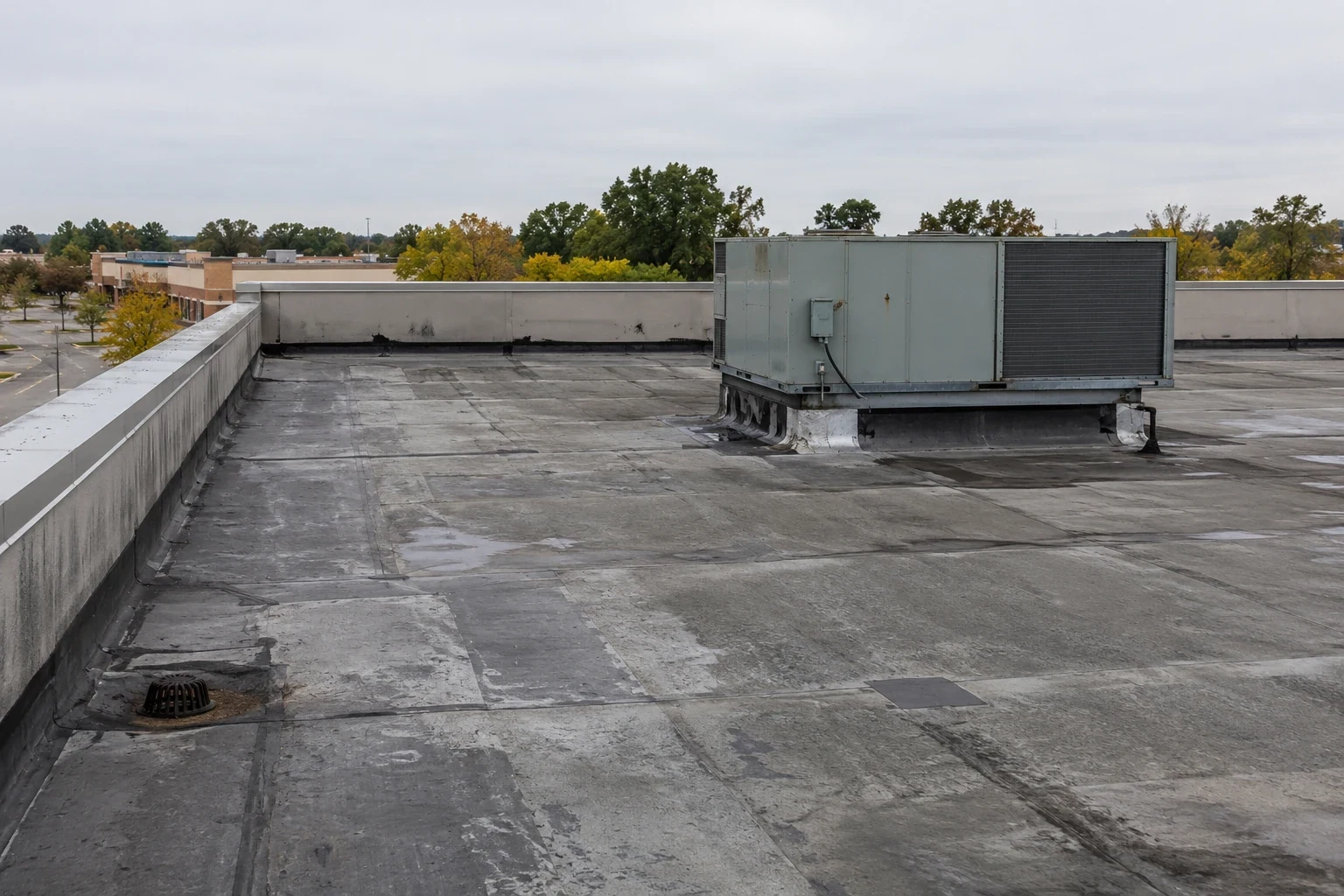
The first walk on a Pelham roof follows a fixed order. We confirm safe access and any fall-protection need, photograph the reported location from inside, then go up and trace the water path. We check the drains and scuppers, the perimeter metal and the field seams. We look for ponding, lifted laps, split flashing and fasteners backing out of the deck.
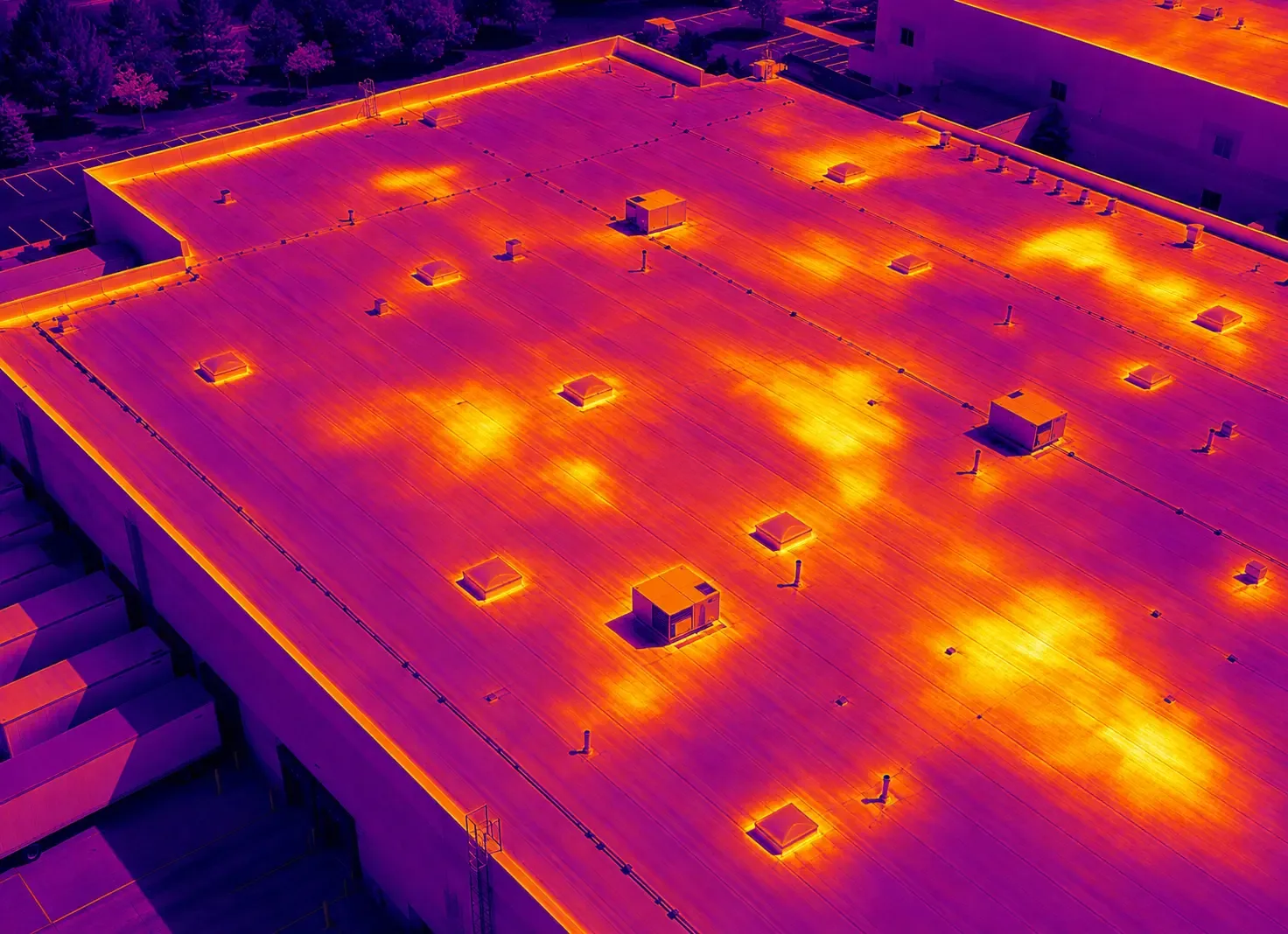
Where wet insulation is suspected, a moisture survey separates damp areas from dry ones so the replacement boundary is drawn on evidence. A drone pass is useful when a roof is large or access is tight, and the hands-on walk confirms what the images show. The written report lists each finding with a photo and a location, and states which items are patches, which need new details and which can be watched.
New England weather and roof timing
Lowell's station shows a 24.9°F January mean, and in a region with that mean exterior roof materials go through repeated freeze and thaw. Water that enters a small opening in the afternoon can freeze overnight and widen it. Snow load, ice at the eaves and clogged drains are the winter conditions we check before the first storm, not after it.
Weather also decides what kind of repair is possible on a given day. Adhesives and sealants need dry, workable temperatures. In cold or wet weather we place a temporary dry-in, mark its boundary and schedule the permanent repair for the next suitable window. A snow and ice damage repair often begins that way, with protection first and the final detail once the roof is clear and dry.
Scope, code and cost drivers
Price moves with how far the repair reaches, which membrane is on the roof, what equipment gets the crew up there and how much of the interior needs covering. A single flashing repair on an open roof is a different job from a multi-section repair above an occupied medical suite. We list each item, where it sits and the assumption behind it, so the owner sees what moves the price.
Pelham sits across the state line in New Hampshire, where the Massachusetts 10th edition code does not apply, so on larger scopes we confirm which code and energy provisions apply to a New Hampshire project before pricing insulation or an overlay. When replacement is the sound answer, the plan for a full roof replacement states the reason and the conditions that would change it. A written list of assumptions accompanies the price, so a change in the code answer shows up as a revised line and not a surprise at tear-off.
Commercial Roofing Questions
A leak showed up in one tenant space on Route 38. Does the repair stay inside that unit?
Not necessarily. On a shared roof, water often travels along the deck or under the membrane before it appears at a ceiling. We trace the path across the roof sections that serve the strip and set the repair boundary where the evidence stops. The report names every tenant space that sits below the affected area.
What does a restaurant roof need that an office roof does not?
Kitchen exhaust adds grease, heat and several penetrations, and those details wear faster than the open field of the membrane. We check the fan curbs, the flashing around each one and the drainage near the exhaust. Grease on the surface can also affect how a patch bonds, so the area is cleaned before any material goes down.
How do you protect a medical practice during roof work?
Interior protection comes before the repair itself. We confirm which rooms hold equipment or records, agree on a safe access route for crews and set the hours for noisy tasks with the practice manager. Tarps, dry-in and a staged scope keep the office open where the building allows it.
Does Pelham's location in New Hampshire change how you price a project?
It changes which code and energy provisions we confirm before writing the scope, since the Massachusetts 10th edition does not govern a New Hampshire address. Material, access and protection costs are priced the same way. The price sheet lists each assumption so a change in code requirement shows up as a clear line item.
When is a temporary dry-in enough, and when is it not?
A dry-in holds when the opening is small, the surrounding membrane is sound and the weather will turn in a few days. It stops being enough when insulation below is wet, the seam keeps failing or the next freeze is close. We say which case applies and set a date for the next update, which carries a price or a recommended test.