Wait for the wind to drop before anyone goes up. The first post-storm step is a decision about safe access: sustained gusts after the main band has passed can still lift loose metal and move a flapping membrane, and a roof that is wet and strewn with debris is a fall risk. Once access is safe, the walk looks for the active water path and marks what can be protected from the inside.
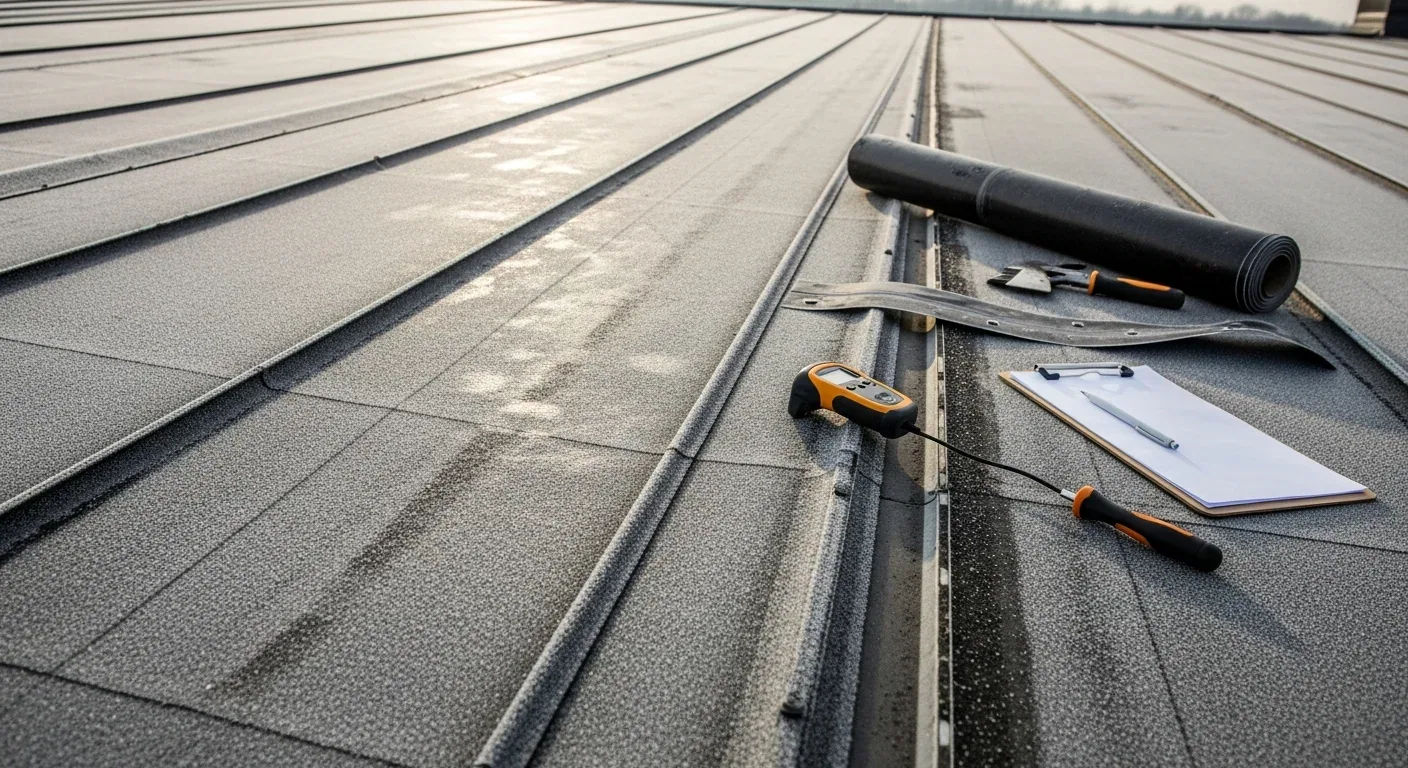
Hurricanes sit on the city's list of major natural hazards in its mitigation report, next to nor'easters, snowstorms and ice storms. That frames how the response is planned. A hurricane report to us starts a sequence: first-hour check, temporary dry-in, assessment of wind and water damage, a priced scope and a return window for permanent work. The inspection note keeps each step separate for the owner and the insurer.
Wind Uplift and Debris Impact
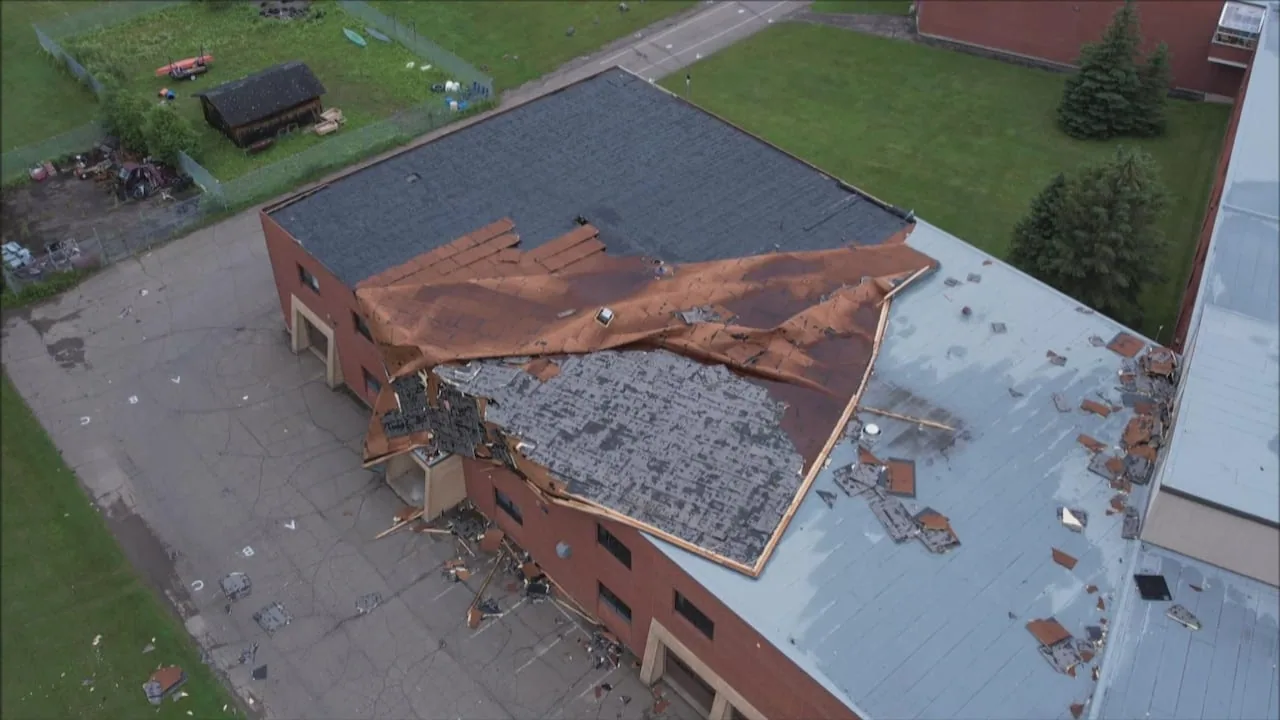
Hurricane winds load a roof in two ways. They lift it, and they throw things at it. Uplift concentrates at corners, edges and the upwind slope, where pressure is highest. The perimeter metal bends, the sheet lifts from its fasteners or adhesive, and the insulation beneath can shift. Impact comes from branches, signs, loose rooftop items and material blown from other buildings, and it cuts or crushes the surface.
We separate the two in the report. Uplift damage is mapped by area, with the edge and corner zones recorded first. Impact damage is recorded by point, with a photograph and a size. A roof can have both, and the repairs differ: uplift needs re-securing or replacing membrane sections, while impact needs patches, as in membrane puncture repair. The edge work follows wind damage repair.
Parapets and walls take their own share. Wind-driven rain pushed against a wall finds any open joint in the counterflashing or the coping, and water runs down inside the wall. We check the cap joints, the reglets and the base flashing after a storm, because a roof that looks intact from above may be taking water at the wall. Findings go to the flashing repair scope.
Photographs of each break are taken from a fixed height with a scale, so the size of the damage can be read later without a site visit.
Rain Intrusion and Wet Insulation
Hurricanes carry heavy rain, and rain finds every opening that wind created. Water that enters at a lifted edge or a cut spreads under the membrane, wetting insulation along joints and deck flutes. Interior stains may appear far from the opening, and some do not appear for days.
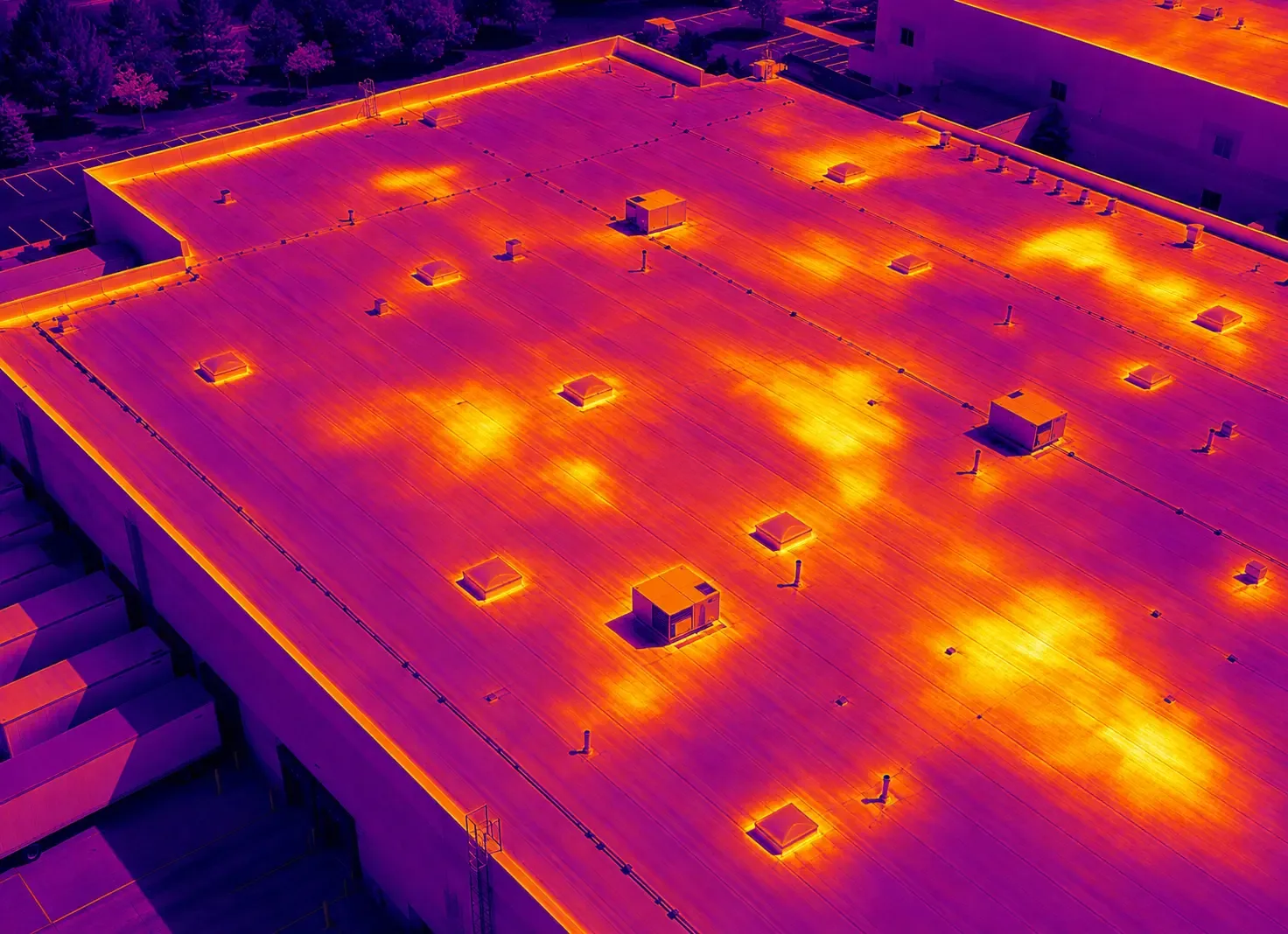
An infrared moisture survey maps wet insulation once the roof is dry enough to read, and a core sample confirms the findings. A fall roof opened by wind takes ordinary rain too: the Lowell station averages near 48.5 inches a year and about five in October. The repair boundary includes the wet area, since leaving wet board in place sets up the next leak and the next freeze-thaw failure.
Drains and scuppers matter right after a storm. Debris blown onto the roof collects at the low points, and a blocked drain turns heavy rain into ponding in hours. We clear the strainers on the first visit and photograph the result, then check the overflow paths. If water stood on the roof during the storm, the ponding record shows how deep and where.
Rooftop Equipment and Penetrations
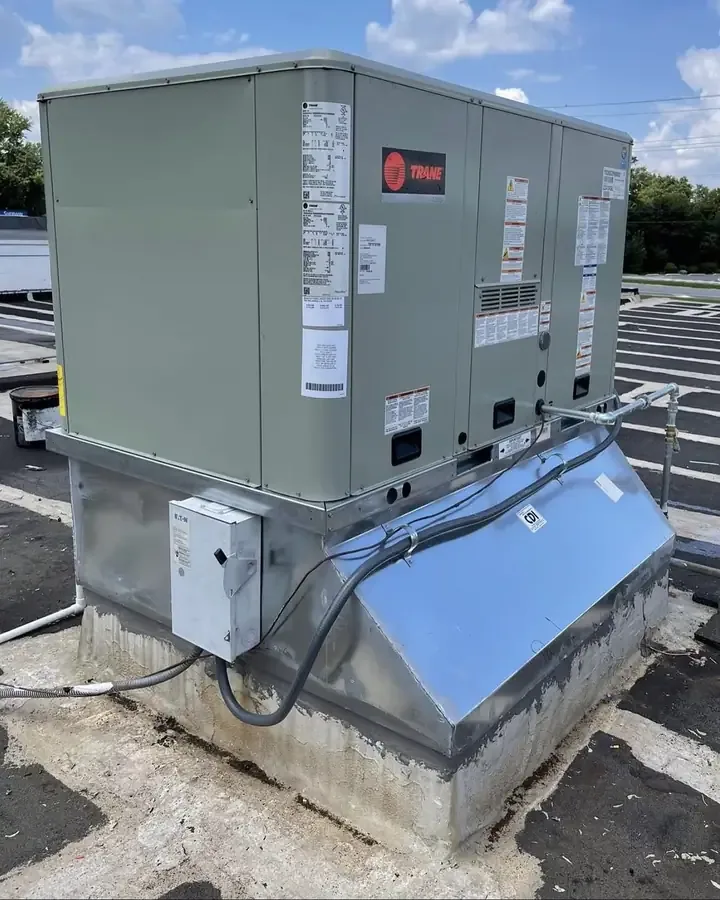
Rooftop units, exhaust fans, antennas and solar equipment are the items most likely to move in a strong wind. A unit shifts on its curb, a fan housing tears away, a conduit pulls from its fitting. Each movement opens a seal in the roof or leaves a hole where the item stood. We list every rooftop item on the roof plan, mark its condition and note whether it needs a mechanical trade before the flashing can be closed.
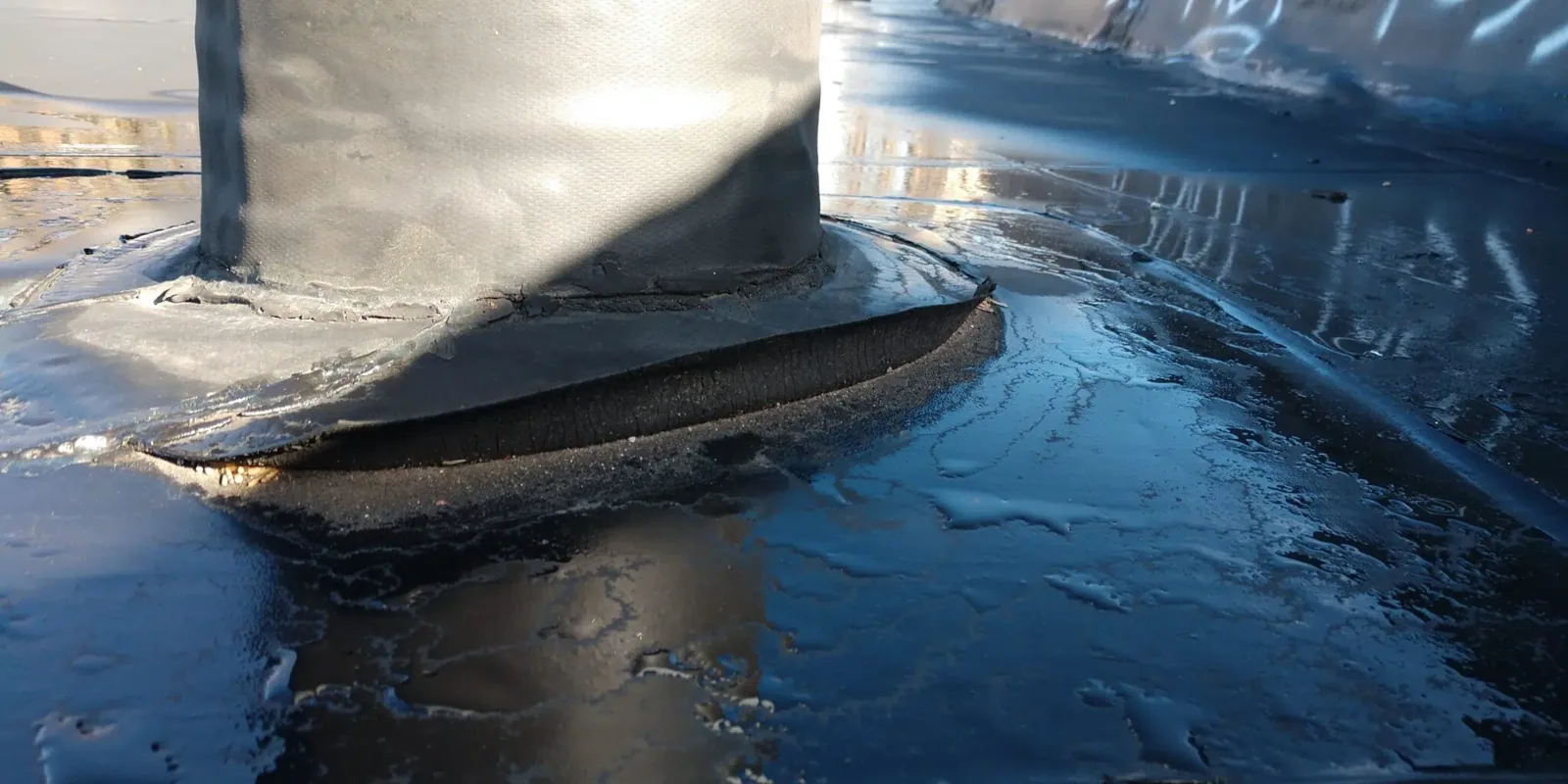
Curb flashing is rebuilt after the unit is secured. If a curb has moved, its supports are checked, and the curb and its supports are re-set or replaced before new flashing goes on. A hole where a vent was torn off is covered with a temporary patch the same day and closed with permanent flashing once the trade has finished.
Staging After a Regional Event
A regional storm can put many roofs in need of work at once, and material and crew time become the limit. The I-93, I-495 and Route 3 junction, with its direct links to Boston, shapes the routes trucks take. We stage dry-in material first and schedule permanent repairs in order of risk to the interior.
The order follows three questions. Is water entering? Is anything valuable below it? Is the damage getting worse? A yes to all three moves a roof to the top. A roof with a small opening over an empty storage room moves down. The cost update tells the facility director where the building falls and why, with the next update date.
Interior protection runs alongside. Equipment is covered or moved, wet ceiling tiles are marked and removed where they hang, and the facility director's team is told which areas are unsafe. A moisture reading of the ceiling and walls establishes the baseline for the insurer and for later drying work.
Code, Claims and Cost Update
For applications filed on or after July 1, 2025, only the state's 10th edition code applies, a version of the 2021 IBC with Massachusetts amendments. A large roof repair after a storm can fall under it, and the local energy provisions must be confirmed. The scope lists what the permit may require so the owner can raise it with the building department.
For the insurer, the file holds dated photographs, the roof plan with damage marked, core samples, the dry-in record and a split between emergency and permanent items, the same set of records that insurance claim assistance relies on. Owners with buildings across Lowell receive the same file for each address. After the permanent repair, a storm damage follow-up visit checks seams, edges and flashing.
The closeout file for a storm repair holds before-and-after photographs, test results, product data and the follow-up date. Owners can compare it with the pre-storm record from any earlier inspection, and the difference between the two sets of photographs shows exactly what the storm changed.
Commercial Roofing Questions
How soon after a storm can a roof be inspected?
As soon as wind and wet conditions allow a safe walk. The first step may be a ground or lift survey, and the roof walk follows when gusts fall and the surface is safe to cross.
Is a tarp enough until the permanent repair?
For a short time, yes. How long depends on the weather and the interior at risk. We inspect the tarp after each storm and replace it if it has worn or shifted.
What separates hurricane damage from earlier wear?
Fresh breaks, clean tear edges and clusters at corners and the windward side point to the storm. Chalking, shrinkage and weathered seams across the field point to age.
Can a roof be repaired before the insurer visits?
Emergency protection can, and should. Permanent work waits until the adjuster has seen the damage or released it in writing, and we photograph everything first.
Which roofs are repaired first after a regional storm?
Those with active water entering and valuable contents below. The cost update lists the order and the reason, so each owner knows where the building stands.