Service times set the first move. A report from a church usually comes from a sexton, a facilities volunteer, or a pastor who has found water on a pew, a stain on a ceiling, or a puddle in the vestibule. We ask where it is, when the next service or event is, and what sits below the water: seating, an organ, art, a fellowship hall, a nursery. Next, people stay clear of the wet area, someone confirms who can reach the roof section above, and the interior gets covered before anyone opens a hatch or sets a ladder.
A church roof in Lowell, MA, sees rain through the year and winter weather that tests valleys, gutters, and flashing. The person who calls us may not be a roofing expert and does not need to be. You get the first move, the temporary dry-in, the inspection, the repair boundary, and the price, each with a time.
Sanctuary Protection and Service Dates
The room below the roof decides the response. A sanctuary has fixed furnishings, often a high ceiling, and contents that cannot be moved easily. A fellowship hall or classroom is simpler. We ask the church to move what can move, cover what cannot, and keep a clear route for anyone entering. For a high ceiling, we place protection from the roof side when we can, since a drip from height travels.
Services, weddings, funerals, and community events are dates that matter. We build the schedule around them, not the other way around. If a wedding or funeral falls in the same week, we say plainly whether the temporary cover will hold or whether the date should move, and we put that in writing for the pastor. A temporary dry-in stops water now. A permanent repair follows when the weather and materials allow, and we name the date. If the sanctuary must be used during the weather hold, the dry-in plan covers it, and we say how long it can stand.
Steep Slopes, Valleys, and Low-Slope Additions
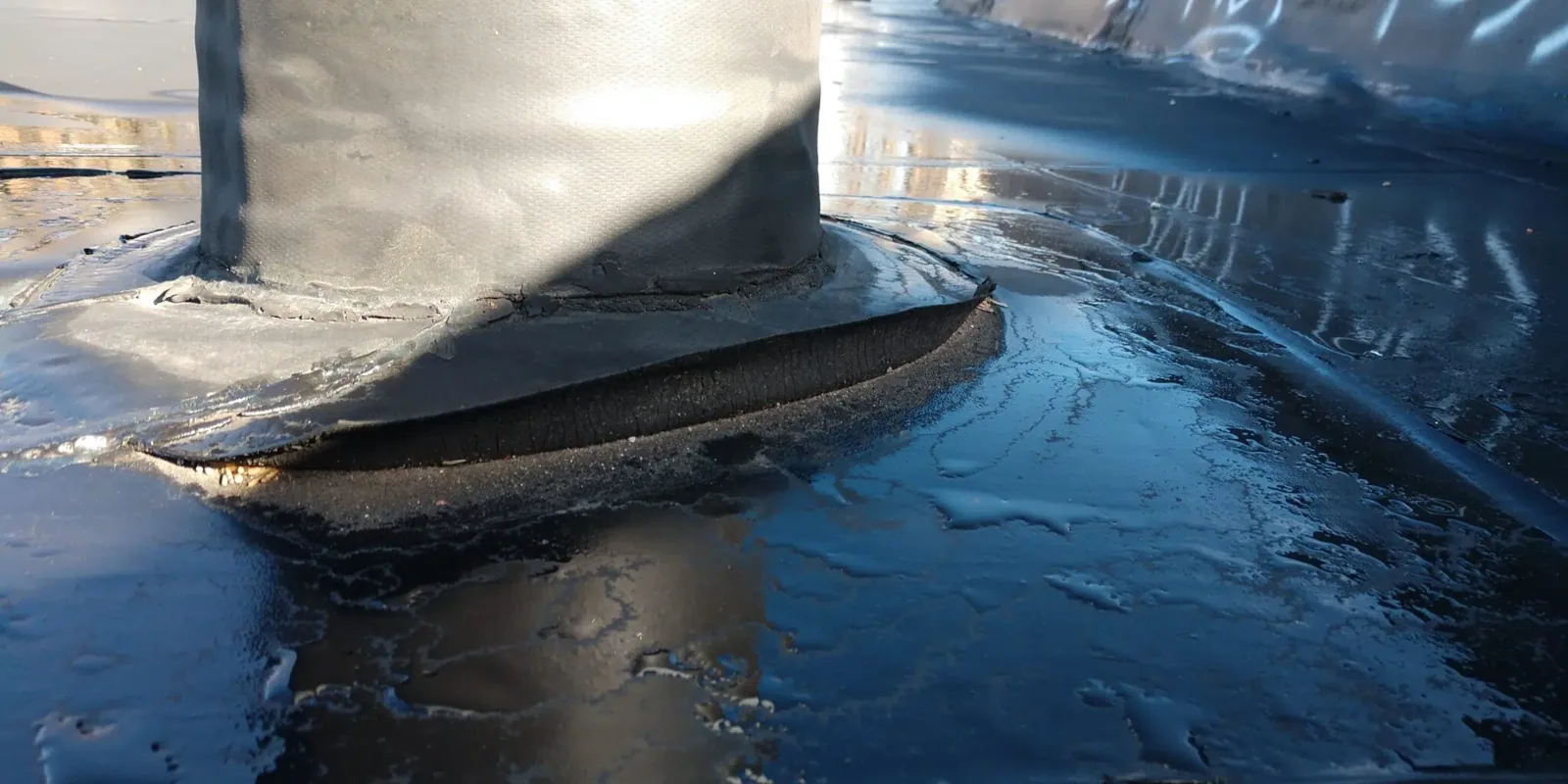
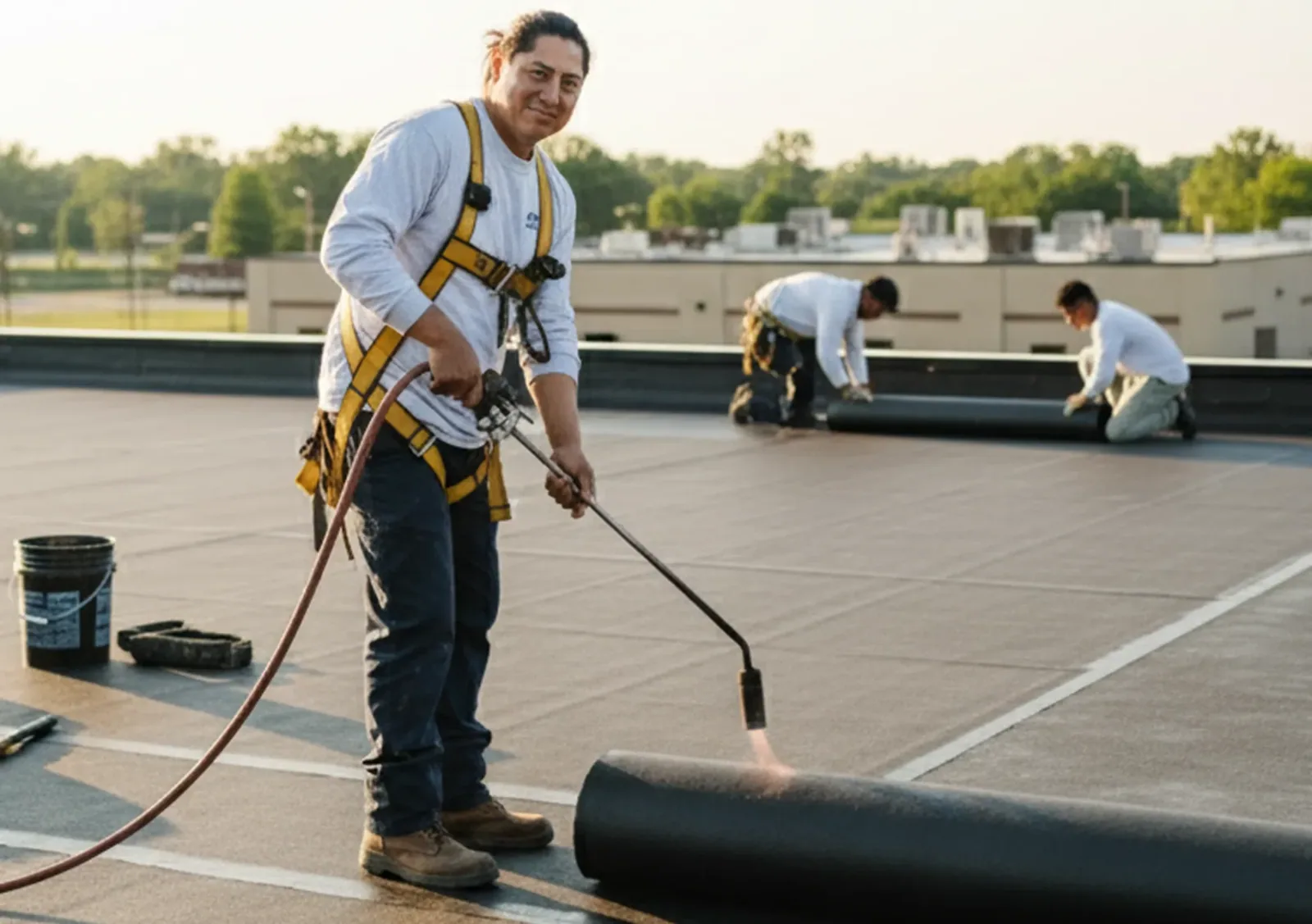
A church can combine steep roofs over the sanctuary with low-slope roofs over halls, additions, and connectors. They fail differently. A steep slope tends to fail at valleys, ridges, flashing, and the roof-to-wall transitions. A low-slope section fails at seams, drains, curbs, and penetrations. We read each section on its own terms and record which system it carries.
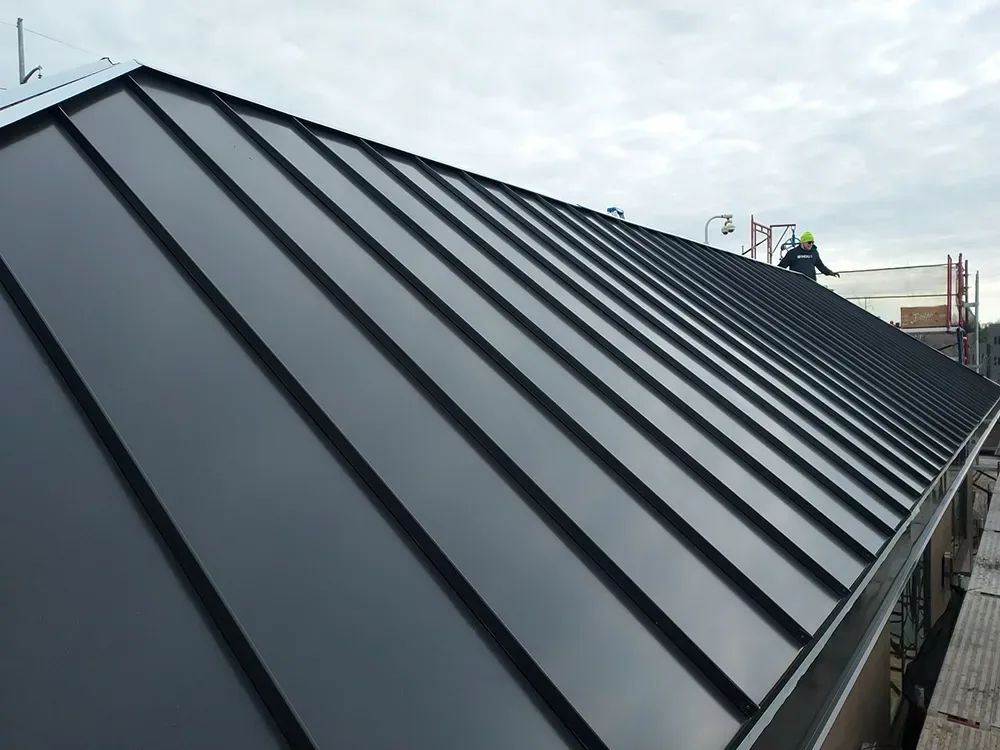
Valleys and wall intersections gather water and debris. Gutters hold leaves and ice. Where a steep roof drains onto a low roof, the lower membrane takes the wear, and a splash pad or a protective strip is worth adding. A flashing failure repair at those transitions is often the fix. Where the whole system has aged out, a standing seam metal roof is one option for steep sections, chosen with the congregation and, where required, with review.
Historic Review and Exterior Elements
The Historic Board reviews exterior work inside the Downtown Lowell Historic District, a district the city's planning materials place across much of downtown. If the building lies within that district, the congregation should ask early whether a roof change touches an exterior element. Roofing color, material, visible flashing, and replaced details are the likely items.
The church knows its status, or can ask the city. Where review applies, the scope names the exterior elements for approval and the review time gets its own line. A leak does not wait for a committee, so the temporary dry-in is separated from the permanent work and can proceed at once. That keeps the building dry while the approval runs.
Congregation Decisions and Funding
Roof decisions in a congregation move through a board, a committee, or a vote, and money may come from reserves, a campaign, or a grant. The process takes time. We help by writing the decision in plain steps: what the roof needs now, what can wait, and what each choice costs. A roof condition report with photographs gives the board something it can read and share.
The report ranks sections by condition and cost exposure. A leaking valley may be urgent. A worn but watertight hall roof may wait a year or two. A roof capital plan spreads the work over budget years, so the congregation funds the most urgent section first. The numbers go to the board in plain terms, so the choice stays with the congregation. Churches in Chelmsford and Tewksbury, and in Lowell itself, receive the same report layout, and a parish or denomination office that oversees several buildings can compare them side by side. Crews and materials reach the area by I-495, I-93, and Route 3, and we plan deliveries so that parking and entrances stay open for worshippers on service days.
Winter Drainage and Storm Damage
Heavy winters are part of the local record, and they land hardest on valleys and gutters. The NOAA station at Lowell averages near 25 degrees in January and 4.54 inches of precipitation in December. On a church, those conditions show up at gutters, valleys, and the places where a steep roof sheds snow onto a lower one.
After a storm, we check gutters, downspouts, and valleys first. A snow and ice damage repair record logs each damaged section, which helps with insurance and with the repair order. We do not ask volunteers to clear a roof, and we do not work from a ladder on ice. Snow that slides from a steep slope can land on an entrance or a walkway, so the report flags any roof edge that sheds toward a door and recommends guards or a barrier where the risk is real. Gutters on a church often run long and are hard to reach, which is why we photograph them from the roof side, mark each clogged stretch, and clear them before the first hard freeze.
Cost Update and Return Window
The temporary dry-in is priced the day water is active, and the permanent repair once inspection is done. Both include access, hours, and the weather hold. The update lists what could change the number, such as hidden rot at a valley or wet insulation under a low roof, and names the date of the next update.
Insulation choices follow the local energy rule, which is confirmed when insulation is part of the scope. Other community buildings follow similar steps, including the school roofs and municipal buildings in Lowell and nearby Dracut.
Commercial Roofing Questions
What if a service is scheduled while the roof is open?
We plan around it. The roof is closed watertight before the service, the work area is kept away from entrances, and noisy tasks move to other days.
Can volunteers help with a leak?
With interior steps, yes: moving items, laying sheeting, and keeping people clear. Roof access and repairs stay with trained crews, since a fall or a cut membrane makes the problem larger.
Do we need historic approval for a repair?
If the building sits within the Downtown Lowell Historic District, the work needs review only when it touches an exterior element. The church knows whether it is inside. The scope lists exterior items by name, and a separate line holds the days set aside for approval.
Where does water usually enter a church roof?
At valleys, wall intersections, gutters, and low-slope transitions. The inspection checks each and records which one carried the water.
How can a board compare repair and replacement?
Read the moisture map and the repair history together. Repeated leaks in new places or wet insulation across sections point to replacement. The update shows both prices.