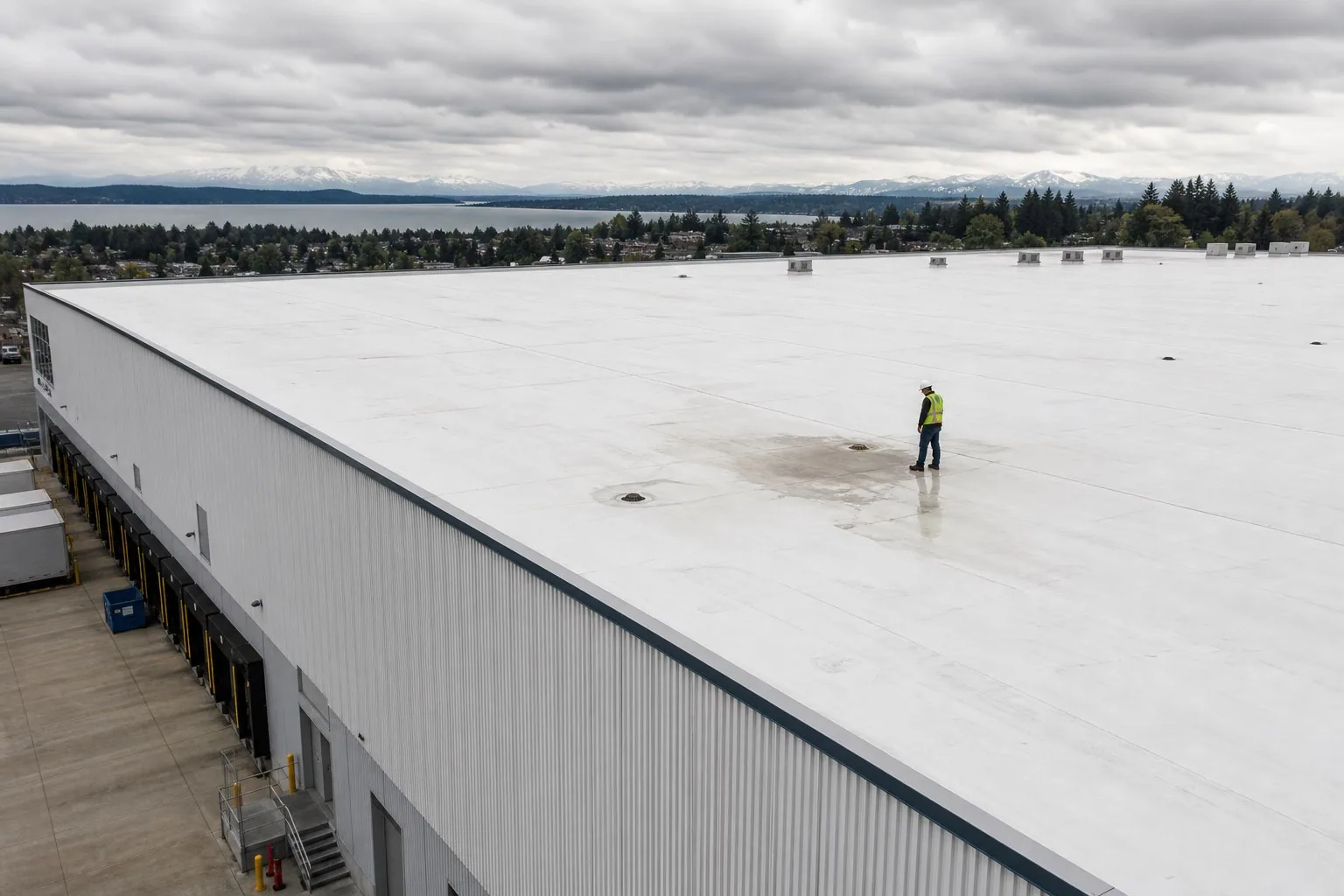
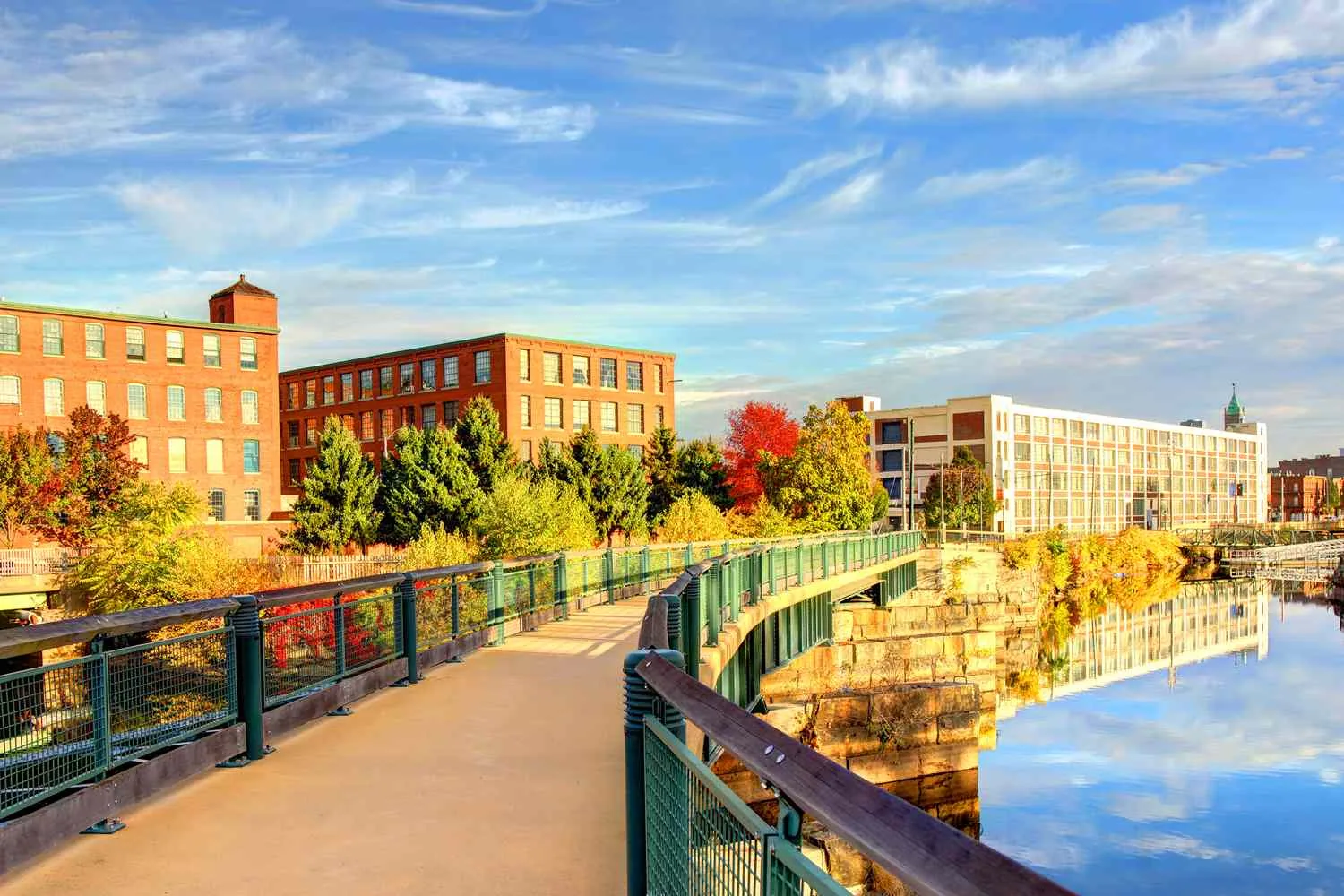
Methuen, MA has easy access to I-93 and I-495, and its planning materials describe a commercial pattern concentrated on arterial and collector roads. A roof on one of those roads is usually over a business that cannot close: a shop, a clinic, a restaurant, a service garage. The report starts with the same three questions. Where is water entering, what is below it and can the crew reach the roof safely. We confirm all three before choosing a crew window.
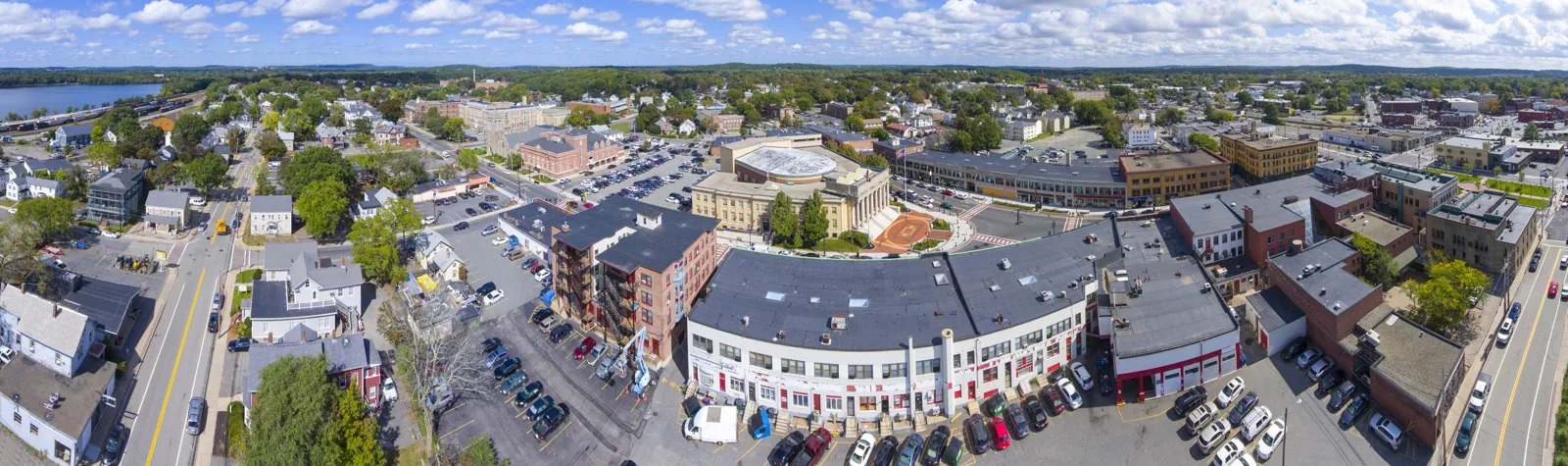
Emergency calls are taken at any hour, holidays included. On the first visit we note the location, the cover placed inside and the visible state of the roof. After the inspection, the update carries a price for the repair boundary and shows the temporary dry-in as a separate line, so the owner can decide on spending with the facts in hand.
Route 110, 113 and 28 buildings
The Master Plan marks Route 110, Route 113 and Route 28, along with Pelham Street and Pleasant Street at Jackson Street, as corridors with commercial sites that are underused. That description opens a particular question for a roof owner: what condition is the roof in, and what does it cost to bring it to a standard that a tenant or buyer will accept. The inspection reads the membrane, the insulation, the drains and the flashing, and the report says what it finds.
Underused sites also pose a practical question about who is on the property. Where a building is partly empty, nobody may be watching the ceilings, so a slow leak can run for weeks before a report arrives. We check the interior for old stains, soft tiles and mold odor, because those clues show how long water has been entering and how far it has traveled.
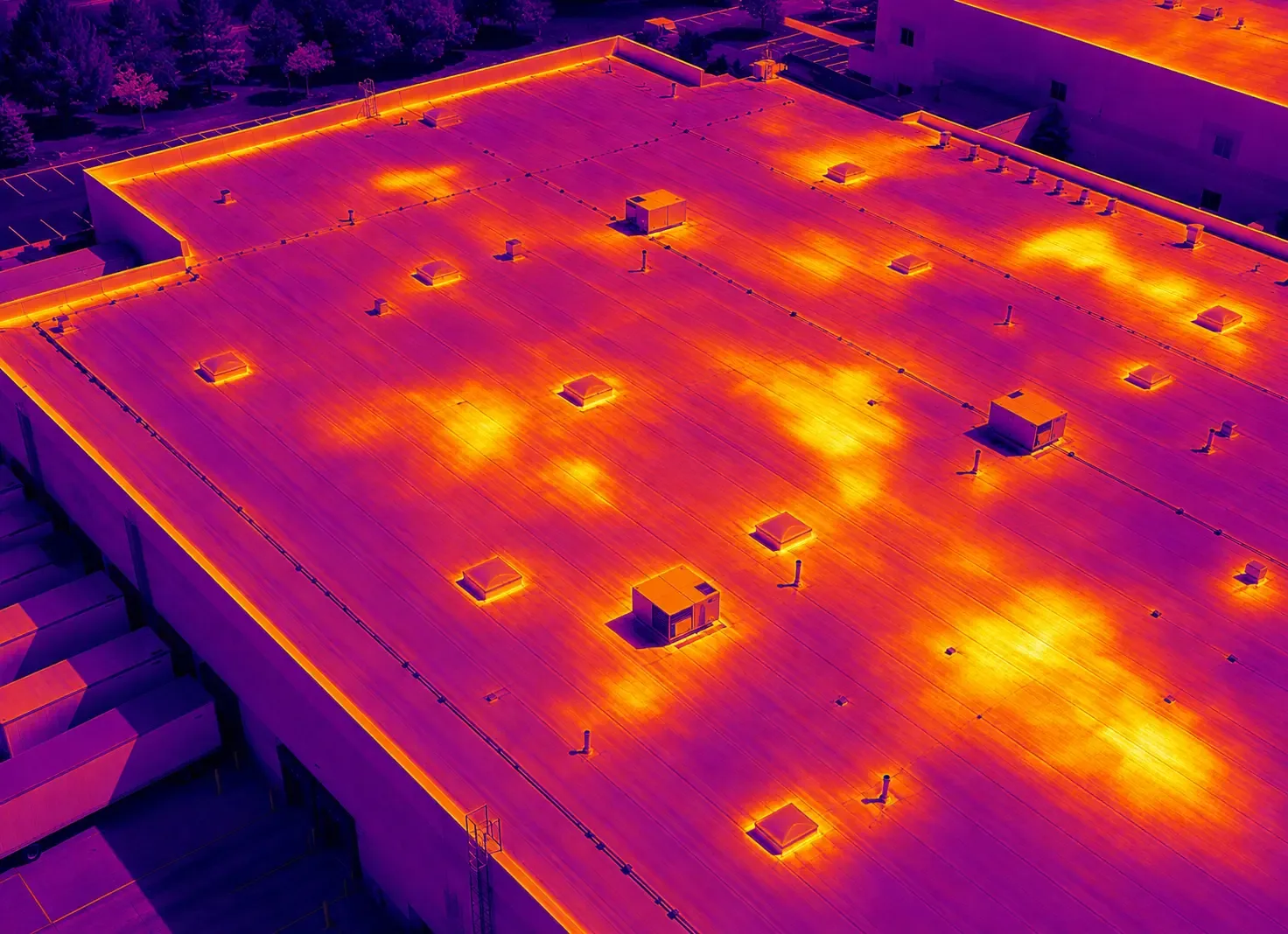
For an owner repositioning a site, the roof often decides the budget. A sound roof with isolated defects supports a repair and a maintenance plan, and the owner can show a prospective tenant a written record of what was done and when. A roof with wet insulation across several sections may need replacement before a new tenant moves in. A moisture survey maps the damp areas so the replacement boundary is drawn on evidence, and a due diligence roof survey gives a buyer a written record before closing.
Downtown and the retail frontage
The City plan identifies downtown, commercial corridors and industrial space as distinct opportunities for redevelopment and employment growth. A downtown roof is worked on in tight conditions: sidewalks below, neighbors on both sides, and limited room for a lift or a dumpster. We plan the lift position, the delivery window and a protected pedestrian path before the crew arrives, and we tell the owner which days need a parking restriction.
Retail and restaurant buildings carry their own risks. Kitchen exhaust adds grease and heat, signs and awnings add penetrations, and storefront parapets hold water against the roof edge. During the walk, we look at parapet caps, counterflashing and the small roof sections that connect a front to the rear. A restaurant roof review includes the fan housings and the surface under them, since grease can affect how a patch bonds. A shopping center roof that serves several tenants is scoped one section at a time.
Industrial space and access
Industrial space is named in the City plan as an opportunity for employment growth, and with I-93 and I-495 close by, material and equipment reach a site easily. Roof work on an industrial building turns on what happens inside it: dock doors, forklift routes, machinery and stock. We plan the lift position away from truck approaches, schedule deliveries outside shipping hours and mark pedestrian routes.
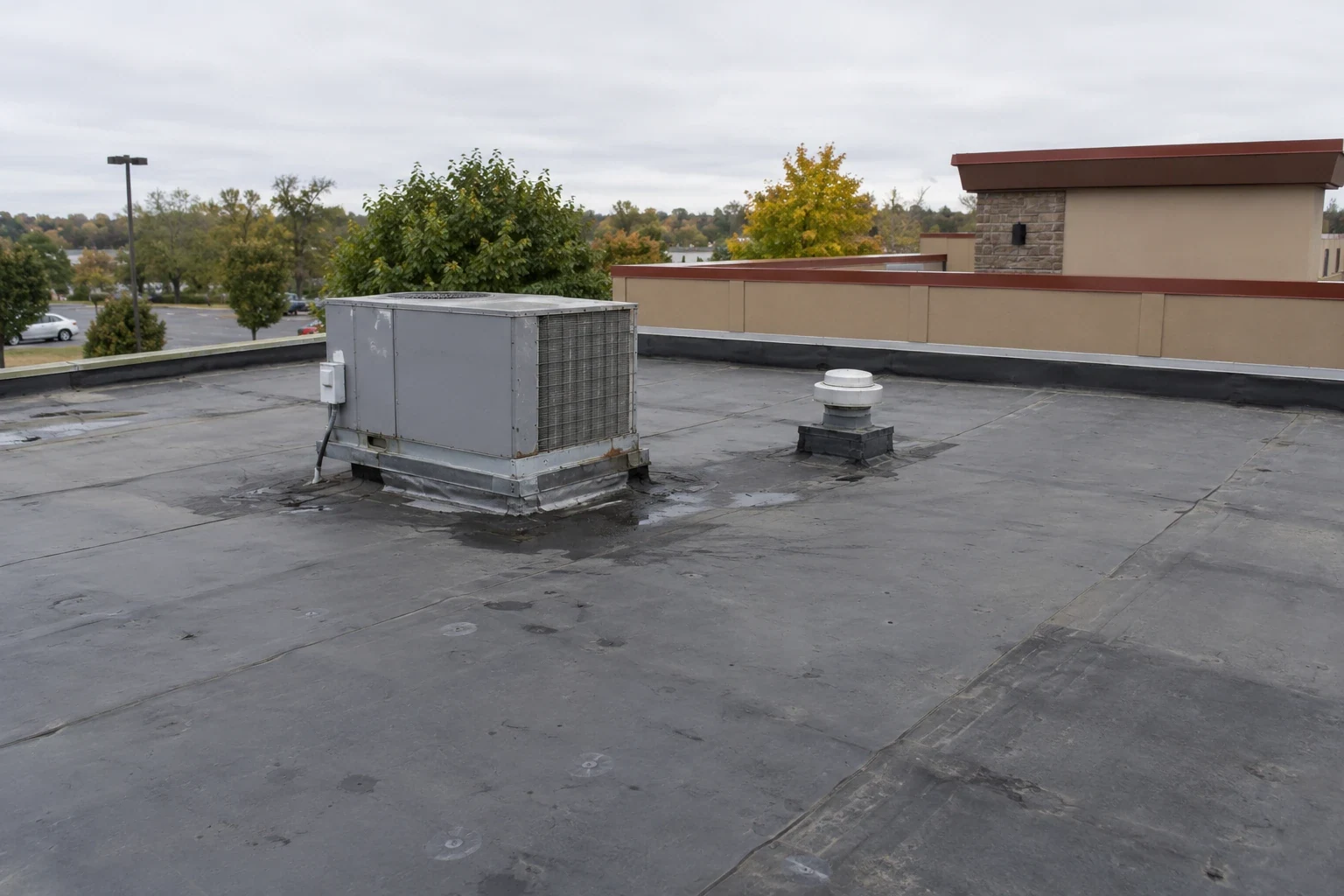
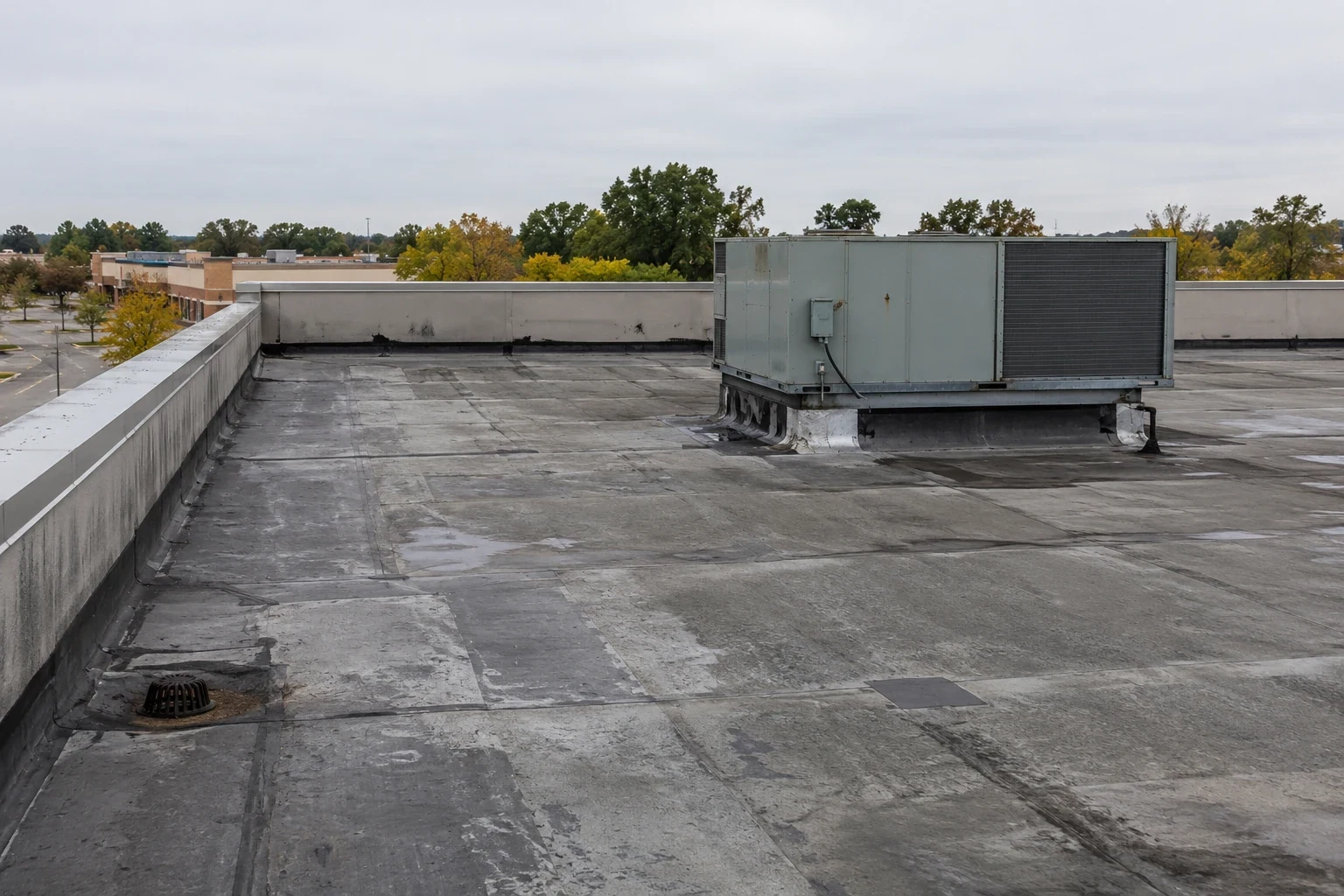
On the roof, we check the drains and scuppers first, then the seams and the penetrations. Rooftop units added over time often have patched flashing or loose fasteners. Where the roof needs more than a patch, the scope compares a repair, a recover over the existing system and a full replacement, and states the conditions that would rule each one out. A recover is considered only when the existing assembly, the drainage and the attachment can carry another layer. A flex industrial building may need two plans for its two interior uses, one for the office front and one for the shop behind it, since each tolerates a different level of disruption.
Freeze-thaw, snow and drainage
Exterior roof materials across the region go through a freeze-thaw cycle that Lowell's 24.9°F January mean helps describe, alongside yearly precipitation of 48.51 inches. The hazard plan for the Lowell area includes nor'easters, snowstorms and ice storms in its major hazards. Before winter, we check that drains are clear, that edge metal is tight and that rooftop equipment supports are sound.
After a heavy storm, the first job is safe access. Snow and ice make a roof walk hazardous, and we wait for conditions that let the crew work. A temporary dry-in covers the interior while water is still coming in. The permanent repair is set for the next dry window. A snow and ice damage repair starts by recording what the storm left: split seams, lifted flashing or crushed insulation at drains.
Cost drivers and approvals
Each line of the price answers a question: how much roof is opened, which system sits there, how crews reach it, what the interior needs and how often we return. The scope lists each item and the assumption behind it. Replacement work follows the Massachusetts 10th edition code, drawn mainly from the 2021 International Building Code, with local energy provisions confirmed ahead of the insulation price.
Owners with several properties along the corridors can ask for a ranked list instead of separate quotes, and the list shows which roof to fix first and what each fix costs. A multi-site roof program sets inspection dates and repair priorities for every roof. Owners in nearby Lawrence, Haverhill and North Andover receive the same itemized scope.
Commercial Roofing Questions
I am buying a building on one of the corridors. How do I learn the roof's condition?
A due diligence survey records the membrane, the drainage, the insulation moisture and the rooftop equipment. You receive photographs, a ranked repair list and a cost range for each item. That supports the price discussion before closing.
A site has sat partly vacant and its roof has had little attention. Where do you begin?
With the drains and the interior ceilings, because standing water and old stains show the roof's history quickly. Then we walk the seams and penetrations. The report separates items that need action now from items that can be watched.
What decides between a recover and a tear-off?
The condition of the existing insulation and deck, the number of layers already in place and the drainage. If the insulation is wet or the deck is weak, a recover is ruled out. The report states which condition decided the question.
How do you keep sidewalks safe during downtown roof work?
We mark a protected zone below the work, place the lift where it does not block the entrance and schedule noisy tasks outside peak hours. The owner is told which days need a parking restriction.
Can one scope cover several buildings along different corridors?
Yes. Each roof gets its own findings and price, and the owner receives a ranked list across all of them. The worst roofs are repaired first, and the others are scheduled with the budget.